Mary Naegeli:
Good morning, everyone. My name is Mary Naegeli. I’m a pastor in partnership here at WCPC. Devona and I are joining together to read a famous story from the Bible, the Book of Jonah. And we’re going to take excerpts from throughout the book so you get the gist of the story.
Jonah 1:1–6 (NIV)
1 The word of the Lord came to Jonah son of Amittai: 2 “Go to the great city of Nineveh and preach against it, because its wickedness has come up before me.” 3 But Jonah ran away from the Lord and headed for Tarshish. He went down to Joppa, where he found a ship bound for that port. After paying the fare, he went aboard and sailed for Tarshish to flee from the Lord. 4 Then the Lord sent a great wind on the sea, and such a violent storm arose that the ship threatened to break up. 5 All the sailors were afraid and each cried out to his own god. And they threw the cargo into the sea to lighten the ship. But Jonah had gone below deck, where he lay down and fell into a deep sleep. 6 The captain went to him and said, “How can you sleep? Get up and call on your God! Maybe he will take notice of us so that we will not perish.”
Devona Brazier:
Jonah 1:12,17 (NIV)
12 “Pick me up and throw me into the sea,” he replied, “and it will become calm. I know that it is my fault that this great storm has come upon you.” 17 Now the Lord provided a huge fish to swallow Jonah, and Jonah was in the belly of the fish three days and three nights.
Jonah 2:1–2,7,10 (NIV)
1 From inside the fish Jonah prayed to the Lord his God. 2 He said: “When my life was ebbing away, I remembered you, Lord, and my prayer rose up to you, to your holy temple.” 7 “When my life was ebbing away, I remembered you, Lord, and my prayer rose up to you, to your holy temple.” 10 And the Lord commanded the fish, and it vomited Jonah onto dry land.
Mary Naegeli:
Jonah 3:1–5,10 (NIV)
1 Then the word of the Lord came to Jonah a second time: 2 “Go to the great city of Nineveh and proclaim to it the message I give you.” 3 Jonah obeyed the word of the Lord and went to Nineveh. Now Nineveh was a very large city—it took three days to go through it. 4 Jonah began by going a day’s journey into the city, proclaiming, “Forty more days and Nineveh will be overthrown.” 5 The Ninevites believed God. A fast was proclaimed, and all of them, from the greatest to the least, put on sackcloth. 10 When God saw what they did and how they turned from their evil ways, he relented and did not bring on them the destruction he had threatened.
Devona Brazier:
Jonah 4:1–4 (NIV)
1 But to Jonah this seemed very wrong, and he became angry. 2 He prayed to the Lord, “Isn’t this what I said, Lord, when I was still at home? That is what I tried to forestall by fleeing to Tarshish. I knew that you are a gracious and compassionate God, slow to anger and abounding in love, a God who relents from sending calamity. 3 Now, Lord, take away my life, for it is better for me to die than to live.” 4 But the Lord replied, “Is it right for you to be angry?”
Jonah 4:9–10 (NIV)
9 But the Lord said, “Is it right for you to be angry?” It is, he said. “I am so angry I wish I were dead.” 10 But the Lord said, “Should I not have concern for the great city of Nineveh, in which there are more than 120,000 people who cannot tell their right hand from their left, and also many animals?”
Mary Naegeli:
The grass withers and the flowers fall,
Devona Brazier:
but the word of our God endures forever.
Tommy Branagh:
Well, thank you so much, Mary and Devona, for reading our scripture this morning, and let me join them in welcoming you. If we haven’t met, my name’s Tommy Branagh. I’m one of the pastors here, and I’m just delighted to be with you this morning as we dive into this incredible text. Whether you’re here in person or online, thank you for being here.
And it only feels right to say a special congratulations to our Knicks fans. What a day to celebrate. Well, it’s fleeting, I can tell you, as a Warriors fan.
Well, today, as we continue in the ONE series, we’re nearing the end of our time in the Old Testament. And last week we moved into this new grouping of books in the Old Testament known as the Prophets. And there are three larger prophetic books and 12 smaller ones. And each one takes the name of the prophet that it’s owned. So the three major books are called Isaiah. That’s what Bart preached about last week, and then Jeremiah and Ezekiel. This morning, as you’ve heard, we’re tackling Jonah. And then next week, Devona is preaching on the book of Micah. And both of those come from that smaller collection of 12 books.
Jonah is only four chapters, and we basically heard the whole thing—there’s little bits that got left out, but we basically just heard the whole book of Jonah. And to be candid, the prophetic books can be challenging. They’re largely written in poetry, and sometimes the imagery can be hard to make sense of. And they move from past to present to near future and distant future. And so orienting yourself in them can take some work.
But the main thing to know about the prophets is that their job was to speak on behalf of God. You might remember when we talked about the covenant that God made with the people of Israel. And as a part of that covenant there were laws with blessings and consequences for obedience and disobedience. And the prophets were one of the ways that God really gave the people a covenant keeping report card. So the prophets were there to let people know how they were doing, which meant that the prophets mostly had to deliver bad news because the people were not good at keeping the covenant.
And so we hear from the prophets that the people are making all kinds of mistakes ranging from lying and cheating to oppressing the poor. And the central thing was worshipping other gods. And it was the prophet’s role to call this bad behavior out.
We actually have a great example in our recent past of someone who filled a sort of prophetic role, serving as a voice like Amos or Hosea or Jeremiah. It was Dr. Martin Luther King Jr. Dr. King had the calling, the courage and the conviction to measure the church’s behavior against God’s standards. He called out white Christians for discriminating against black people, saying this is evil in God’s sight. And a part of the prophetic role of Dr. King was to publicly name that sin. And doing that did not make him popular. In fact, it led to his assassination.
In the Old Testament, prophets faced similar reactions. True prophetic work comes with a very high risk of getting killed. Unsurprisingly, telling the truth is actually a dangerous job.
So that is one of the things that you find in reading the prophets—this sort of truth telling about how the people are doing. But the other thing that you will find are God’s plans for the future. So God actually gives the prophets this special insight into things that haven’t happened yet. That could be a prediction of impending destruction, which is actually what we hear proclaimed in the book of Jonah today. And then sometimes we get this kind of glorious news. These look forwards to a future Messiah and the new heavens and a new earth. And that’s what we heard in Isaiah last week as Bart preached about that.
And as you’re reading through all the prophetic books, the primary audience are the people of Israel. But there are some messages that are intended for other nations. And actually Jonah is one of those. And so a very cool part of our story this morning is a reminder that God has always, always had a plan to bless all people. He’s concerned for the whole world.
But God’s concern for the nations also provides a central tension that is really present in the book of Jonah. Because what we see in Jonah is that God has a plan to bless the people of Assyria. But Assyria was Israel’s enemy. And Jonah, the Israelite prophet that God is sending to Assyria, has no interest in blessing Assyria. And Nineveh is the capital city of the Assyrian Empire. All Jonah wants is for Assyria to be destroyed.
So the question that Jonah wrestles with and the question that I want us to wrestle with this morning is, what do you want for your enemies?
And let me be clear. The question is not what are you supposed to want for your enemies? And the question is not what do you tell people you want for your enemies? The question is, when you look in your heart, deep down in there, what do you want for the people who have ignored you or betrayed you, or disrespected you, or cheated you, or lied to you, or slandered you or hurt you?
Jonah knew his answer. In chapter four of our text, he says that he wants God to send calamity on his enemies. And why? What made the people of Nineveh his enemy? Well, we read in the book of 2 Kings, chapter 14, that Jonah was a prophet during the reign of King Jeroboam II. And to be honest, we don’t have a ton of information on the specific conflicts between Israel and Assyria at this time, but we can guess with a reasonable amount of confidence. These were neighboring nations in a time in which neighboring nations were constantly at war. So we can assume that their history was full of attacks and counter attacks, of plundering and destruction, of battles and certainly of wars.
So Jonah’s desire for their destruction wasn’t rooted in just some abstract dislike. No, he wanted accountability for specific wrongs that had been done. He wanted justice for the people that he knew and loved—ones that had lost property or family or even their own lives at the hands of the Assyrians.
What we see in this book is that God actually has something else in mind. So we’re going to journey through the book of Jonah alongside Jonah to see why is it that God wants something different for Jonah’s enemy than Jonah does. And we’re going to consider as we make that journey, what this might mean for us and what it might mean for our enemies.
So let’s dive into the story. In Jonah, Chapter one, God calls Jonah to go preach against Nineveh, which, as we noted, is the capital city of the Assyrian empire. And that’s interesting, because God’s message is actually one of judgment. Jonah is to go confront them with their sin. It’s that classic prophetic task. But Jonah says no, I’m not doing that. And he runs in the opposite direction.
And in Jonah chapter one, we don’t know exactly why he’s running. That really only gets revealed to us at the end of the book. But Jonah’s initial refusal to go leads to this unbelievably famous part of the book where Jonah finds himself swallowed by a big fish, possibly a whale, maybe a fin whale or a sperm whale. And it holds him safely for three days before vomiting him up onto the shore.
And the fact that this is the most famous part of the story—which, for totally understandable reasons, it’s pretty remarkable to get swallowed by a fish—it doesn’t actually mean it’s the most important part. So we’re not going to spend a lot of time on this this morning, other than to say that as Christians, we do believe that God sometimes intervenes in unique and powerful ways in history, and this is certainly one of those places. But those unique interventions don’t tend to be repeated. In fact, a lot of the things that you read in the Bible are one-of-ones, and this falls into that category. This is the only miraculous rescue by fish story that we have in the Bible. So as Christians, we would not say that God is in the business of sending whales to swallow people, but we would say he did it once. And it seems to be that he did it so that Jonah could get a second chance at his mission.
So once Jonah is vomited up onto the shore, God repeats his command, telling Jonah again, go proclaim judgment against Nineveh. And this time Jonah goes. We read that he walked through the city proclaiming, 40 days until God overthrows the city. And the response of the Ninevites to Jonah’s message is astounding. They hear his message, and we read that they repent. From the king all the way down to the livestock, the people and animals repent.
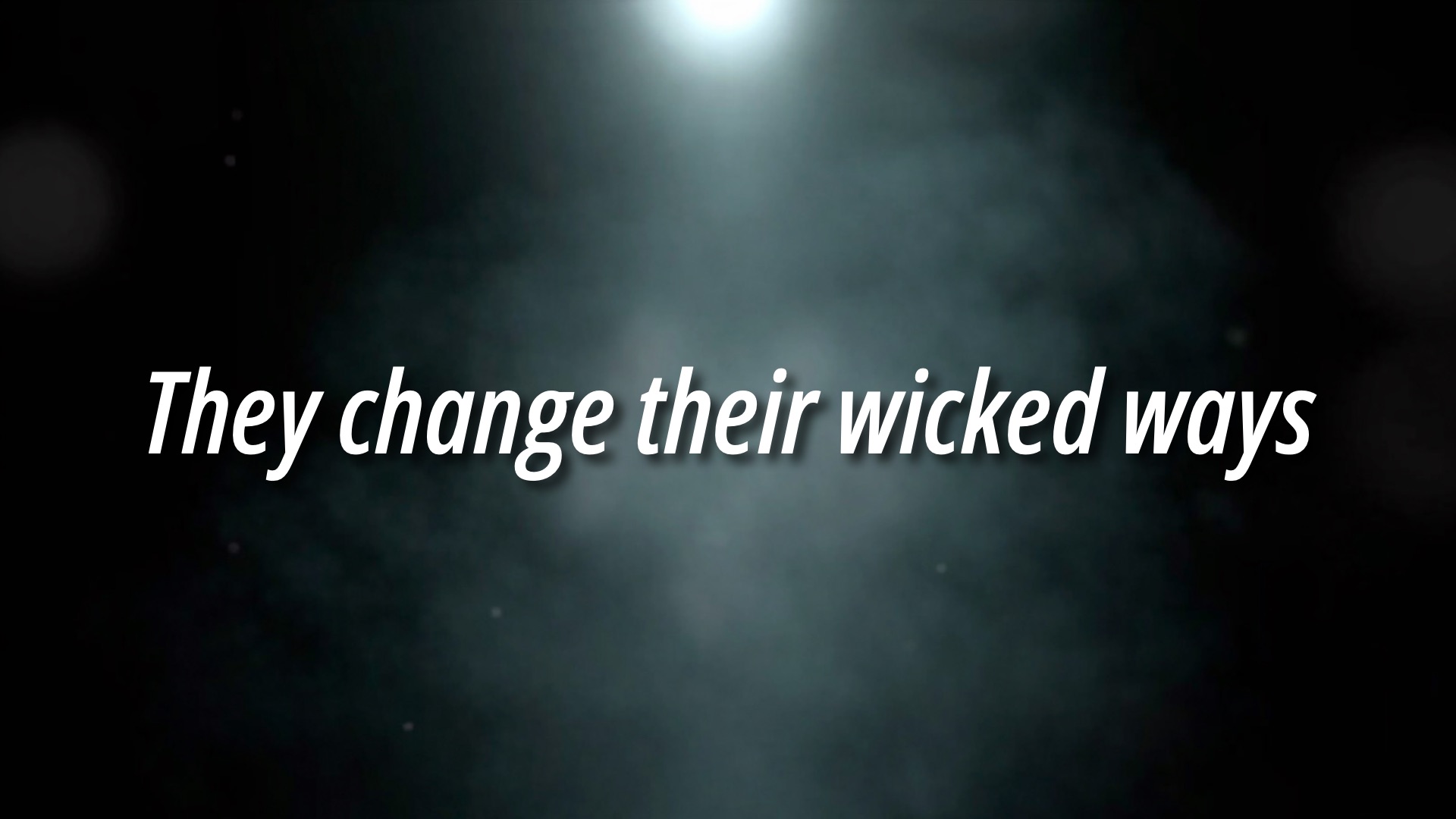
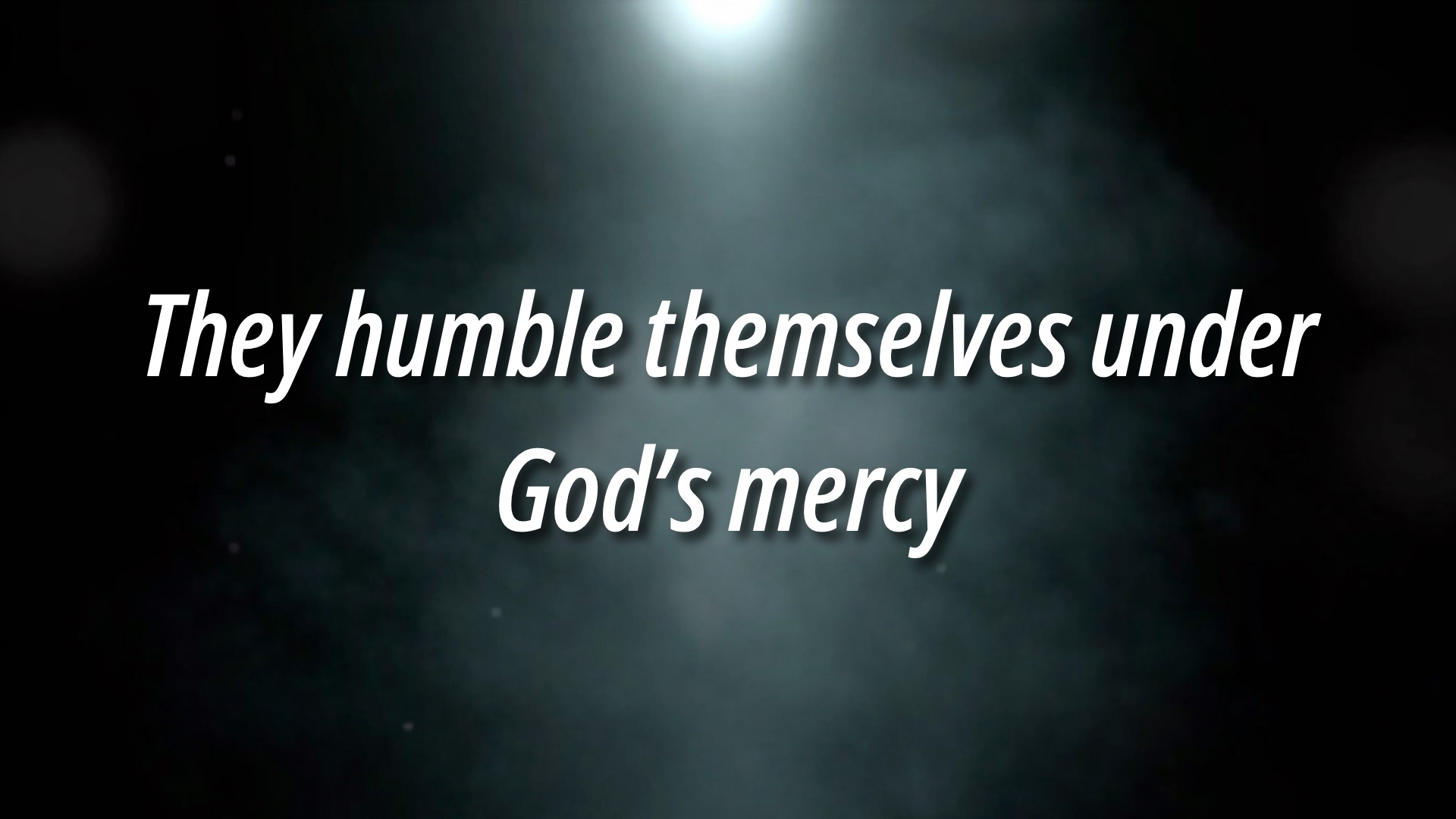
And understanding the significance of this is really pivotal to grasping the heart of the book of Jonah. So I just want to zoom in for a moment on their repentance. Old Testament theologian Paul House describes the Assyrians’ repentance this way. He writes, “They follow the perfect sequence for repentance. They believe God’s word, humble themselves, change their wicked ways, and place themselves under God’s mercy. It is difficult to imagine a more thorough or unexpected response to a prophetic message.”
And here House highlights four components of repentance. So let’s talk briefly about all four. First, they believed God’s word. And believing God’s word is such an unexpected step for the Assyrians, because they don’t have a pre-existing relationship with God. The God of Israel is the God of their enemies. And yet hearing Jonah’s message of judgment, they believe it. They believe that God is real and powerful and they believe that he’s telling the truth about them.
And the thing that makes this even more surprising is that this is not the response that the prophets normally get. Most of the prophets sent to the people of God have their message rejected. And yet here we see foreigners, the Assyrians, accept it. They believe God and they admit that they were doing evil.
Which leads to step two in repentance. They humbled themselves. And so we read that everyone, from the greatest to the least, even the livestock, put on sackcloth. And this is a sign of humility. It’s an acknowledgement that there’s nothing they can do at this point to argue for themselves. Instead, they just acknowledge their own shortcomings and they humble themselves before God.
And then the third part of repentance, they change their wicked ways. We didn’t read this verse as a part of this morning’s reading, but the king of Assyria makes this royal decree in response to Jonah’s message. And here’s what he says in part. He says, “Let everyone call urgently on God. Let them give up their evil ways and their violence.” The word repent means to turn. And this is really what the king says. He’s saying, give up your evil ways, give up your violence. Turn to a better way of living. So really, repentance is not just confessing. It’s not just the admitting that you’ve been wrong, but it’s also committing to change.
And then the final component of repentance that we see is they place themselves under God’s mercy. And once again, you can hear this in another part of the king’s decree. He says, “Who knows? God may yet relent and with compassion turn from his fierce anger so that we will not perish.” And you can hear in the king’s sentiment some uncertainty. He doesn’t know if repentance is going to be enough. Which means that the king doesn’t view repentance as leverage. This isn’t just a ploy to get out of trouble. No, he’s accepted that the decision about their judgment ultimately belongs to God, and yet he calls for repentance all the same.
So these four steps—believing God, humbling themselves, changing their ways, and placing themselves under God’s mercy—are a full picture of repentance. And in response, this is what we see from God. From Jonah, chapter 3: “When God saw what they did and how they turned from their evil ways, he relented and did not bring on them the destruction he had threatened.” And this is just a beautiful picture of God’s mercy. Here God is offering a second chance, a fresh start. It’s the opportunity to begin again. God is acknowledging their repentance, and he relents from his threatened punishment.
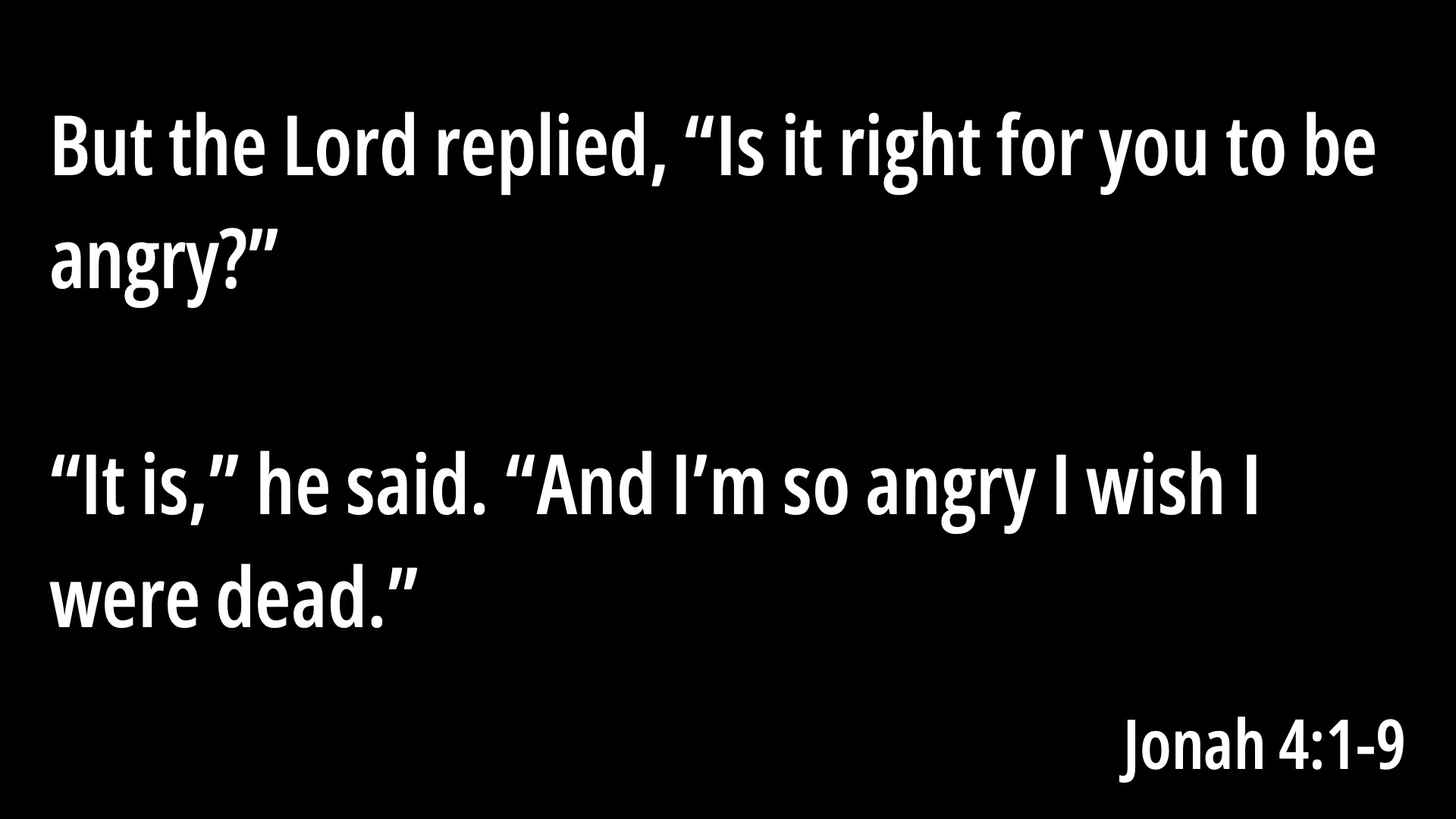
And I’m not sure how that strikes you. I wonder what you think about God showing mercy to these wicked people. But let’s read again how it landed with Jonah. “But to Jonah, this seemed very wrong, and he became angry. He prayed to the Lord, ‘Isn’t this what I said, Lord, when I was still at home? This is what I tried to forestall by fleeing to Tarshish. I knew that you were a gracious and compassionate God, that you’re slow to anger and abounding in love, that you’re a God who relents from sending calamity. Now, Lord, take away my life, for it’s better for me to die than to live.’ But the Lord replied, ‘Is it right for you to be angry?’ ‘It is,’ he said, ‘and I’m so angry, I wish I were dead.'”
So we can see Jonah’s response is fury. He is so mad. He says, God, just kill me. And lucky for Jonah, God does not do this. But why? Why is Jonah so mad? Why is Jonah not reveling in the mercy of God?
Well, the reason is because Jonah wanted his enemies punished. He wanted them to pay for their wrongdoing. Jonah did not think they deserved the opportunity to repent. And I just think this is really important to clarify, because this is an important distinction. The story in Jonah is not the story of God offering an unconditional pardon. You could imagine a scenario where God sent Jonah to declare that despite all their wrongdoing, it’s really no big deal, and everyone in Nineveh is forgiven. So in that version of the story, we would have God’s grace separated from repentance. In that version of the story, God would be giving the Assyrians license to keep doing evil. And in that version of the story, it would be easy to understand Jonah’s rage, because that’s a gross miscarriage of justice and it’s the kind of injustice that we see all the time. This is one of those tools of the powerful, demanding that their faults are forgiven or overlooked while really offering no reason to believe that they’ve changed.
But that’s not the situation in Jonah. God is not offering an unconditional pardon. God actually begins this book by delivering a verdict. The people are guilty and God is threatening punishment, which he would have delivered. But the Ninevites repented, and they truly repented. And in light of that repentance, God shows mercy. And in response to that mercy, Jonah is livid, because Jonah doesn’t want mercy for his enemies.
And it’s easy at this point for us to distance ourselves from Jonah, to just think of Jonah as being callous or cruel. When I look in the mirror, I don’t want to see someone like Jonah staring back at me. But if I’m honest, and I think if we’re honest and we think about our own stories and we consider the longings of our own hearts, I think we’ll find that we have more in common with Jonah than we might want to admit.
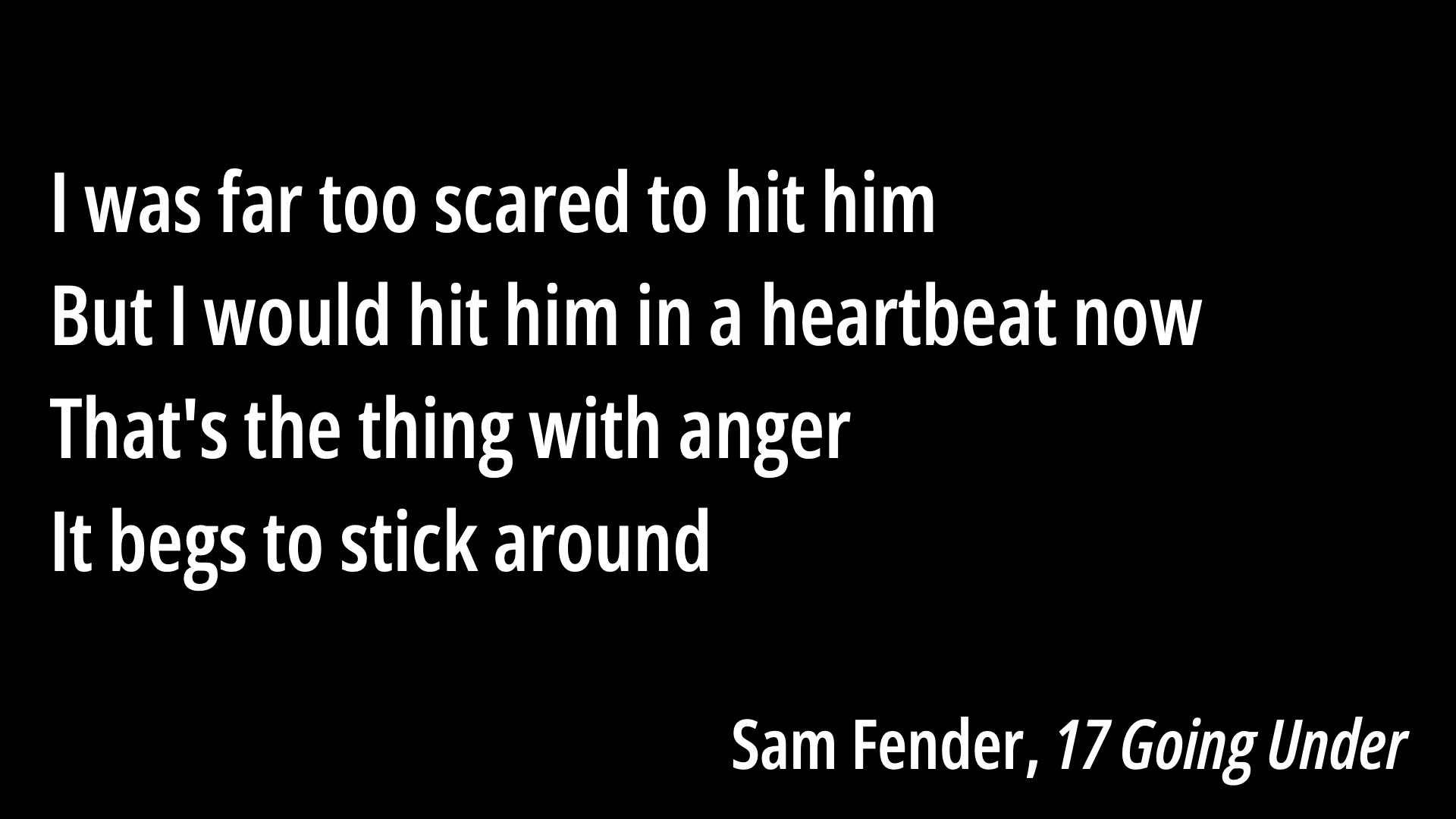
Over the last month, I’ve gotten really into the music of an artist named Sam Fender. He’s from Northeast England, and my favorite song is about his teenage years. It’s called “17 Going Under.” And in this song, he sings about his friend Tom, who gets brutally assaulted. Fender sings that he got his head kicked in. But in this song, he’s actually not talking about his friend. He’s talking about the person who attacked him. And Fender sings about the simmering rage that he feels towards this person. And I just want to read a portion of those lyrics you can follow along on the screen.
He sings, “And the boy who kicked Tom’s head in still bugs me. Now, that’s the thing. It lingers and it claws you when you’re down. I was far too scared to hit him, but I would hit him in a heartbeat. Now that’s the thing with anger. It begs to stick around.”
And every time I hear that song, it makes perfect sense to me. How could you not carry rage at the person who kicked Tom’s head in? Of course you dream about the chance to throw that punch, even all these years later. And I think that if we’re honest, many of us have punches that we are dying to throw, punches that we believe to our core should be thrown.
And that’s where we find Jonah. Jonah has a punch he wants thrown because it feels like a righteous punch. It’s the punch that will rebalance the scales after everything the Ninevites have done. But instead, he has to watch them get mercy. And that just makes him furious. And I think that’s a fury we can relate to.
So, actually, I think when we read this book, the response of Jonah isn’t really the surprising one—that makes sense. The surprising response is God’s. That’s what we have to grapple with—God’s mercy. How do we make sense of a mercy that can feel like injustice? Is this really what we’re supposed to want for our enemies? Is this really what we’re supposed to want for people who have hurt us and ones that we love?
Well, God’s message to Jonah and God’s message to us is, yeah, this really is what we’re supposed to want for our enemies. And why? Why should we want that?
Well, Sam Fender has some thoughts on that, too. In “17 Going Under,” right after singing about the punch that he wants to throw, he sings this. So I’ll pick up with those last two lines. “That’s the thing with anger. It begs to stick around so it can fleece you of your beauty and leave you spent with naught to offer. It makes you hurt the ones who love you. You hurt them like they’re nothing.”
And he’s right. The anger that burns in us doesn’t make us more just or kind or righteous. It actually warps us, and it causes us to hurt, to turn our hurt indiscriminately towards others. And often, often, the people we love bear the disproportionate burden of that anger.
But even when we direct it in the right direction, anger that has no space for mercy just spirals and expands. We see the catastrophic consequences of that kind of anger all around us. It shows up in the legacy conflicts where nations and people groups have been at war with one another for decades, decades and sometimes centuries, each side claiming that their violence is the just punishment that the other side is due. We see it in communities where one act of violence gets answered by another, and these fractures just continue from one generation to the next. And we see this in our very own families, where every new fight is somehow actually just rooted in all of the old grudges.
But God says there’s a different solution. And that solution is not just absolution. God’s not just up in the heavens singing hakuna matata, put your past behind you. No. What God desires and offers and instructs Jonah to offer, and by extension, instructs us to offer, is the hope of transformation. It’s the possibility of a different and reconciled future. What God holds space for is repentance.
Jonah’s error is not that he sees the sins of his enemies. And Jonah’s error is not that he wants consequences for his enemies. Jonah’s error is that he has no possibility of grace for his enemies. He’s lost the ability to care about them. But that’s not God’s way.
As Jonah rages against God’s mercy, here is what God says: “Should I not have concern for the great city of Nineveh, in which there are more than 120,000 people who cannot tell their right hand from their left, and also many animals?”
Is God opposed to the wickedness of Nineveh? Absolutely. That’s why he sent them a message of judgment. But is God’s desire to destroy them? No. God desires for them to repent. He wants them to know his grace. He wants them to turn from their evil ways and to experience transformation. Because God remembers that even in the midst of their evil and wickedness, they are a people that he created, and they are a people he loves. And God’s desire is that they would be reconciled to him.
So in this story, we see a great picture of God’s mercy, but we actually find an even better one in Jesus. Jesus, as he was being executed, prayed for his enemies. He prayed for the very people who were crucifying him. But his prayer was not Jonah’s prayer. Jesus did not say, God, destroy them. No. Jesus prayed, “Father, forgive them.” Jesus’ prayer was an offer of grace. It’s a hope for transformation, the beginning of a different path in which violence would not beget violence, but where instead mercy would beget mercy.
And this is such good news for us. Because the apostle Paul, when writing to the Church in the New Testament, says, “Once you were alienated from God and were enemies in your minds because of your evil behavior. But now he has reconciled you by Christ’s physical body through death, to present you wholly in his sight without blemish and free from accusation.” That is our story. We were once God’s enemies. And it is great news for us that God is a God who offers chances to repent. Because when God had the chance to punish us, to bring calamity upon us, he held open the possibility of repentance. He opened the door to mercy for you and for me.
And if we forget that this is our story, then we risk making the same mistake as Jonah, who forgot that he had once been in the same place as the Ninevites. He forgot that he too had been an enemy of God. But Jesus teaches us that the door to grace does not close behind us. In fact, the prayer that Jesus taught his followers, the one that we pray together every Sunday, includes these words: “Forgive us our sins as we forgive those who sin against us.” That is the story of God’s mercy. It’s the belief that no one is beyond the reach of God’s transforming power. Even wicked Nineveh had it in them to repent. Even Nineveh could receive God’s mercy.
So the prophetic message of judgment to us today is to see the truth that the merciless anger that lived in Jonah also lives in every single one of us. But the call of God’s mercy is to hear the invitation to a better way. A way that opened the door for us in a way that we should hold open for others, even if they are our bitterest enemy.
In the name of the Father, the Son and the Holy Spirit, amen.