Bart Garrett:
Well, good morning, everyone. If we haven’t met yet, my name is Bart Garrett. I’m the lead pastor here. We’re delighted to have you with us this morning. Before I read our scriptures to us, though, I have the opportunity of introducing our speaker today. And if you recognize her, that’s because she preached once last summer while I was on sabbatical. Caitlin Rhodes. Kara Haydian. I’ve been working on that pronunciation all morning. I got it. Will be speaking for us today. It’s been such a delight to get to know Joel and Caitlin, who are church planters in our denomination, Eco Planting, the West Valley Neighborhood Church in Cupertino. And church planting is very near and dear to my heart, so I’ve had the privilege of getting to know these guys in a cohort of church planters that we participate together in as well. I’ve had the opportunity to be on their church’s advisory council, and I just love what they’re doing. Hope you’ll be prayerful and very generous in your support of what they’re doing. It’s a delight to have Caitlin with us this morning. One of the things I loved about her bio on her website is she mentions not growing up in a Christian home. And she said she first got curious about her relationship with Jesus after noticing in college that the kindest, gentlest, and most joyful people she knew were all Christians. And I’m so glad you met the right ones. I’ll just say, but no, it’s really great. So would you now hear God’s word?
Psalm 23 (NIV)
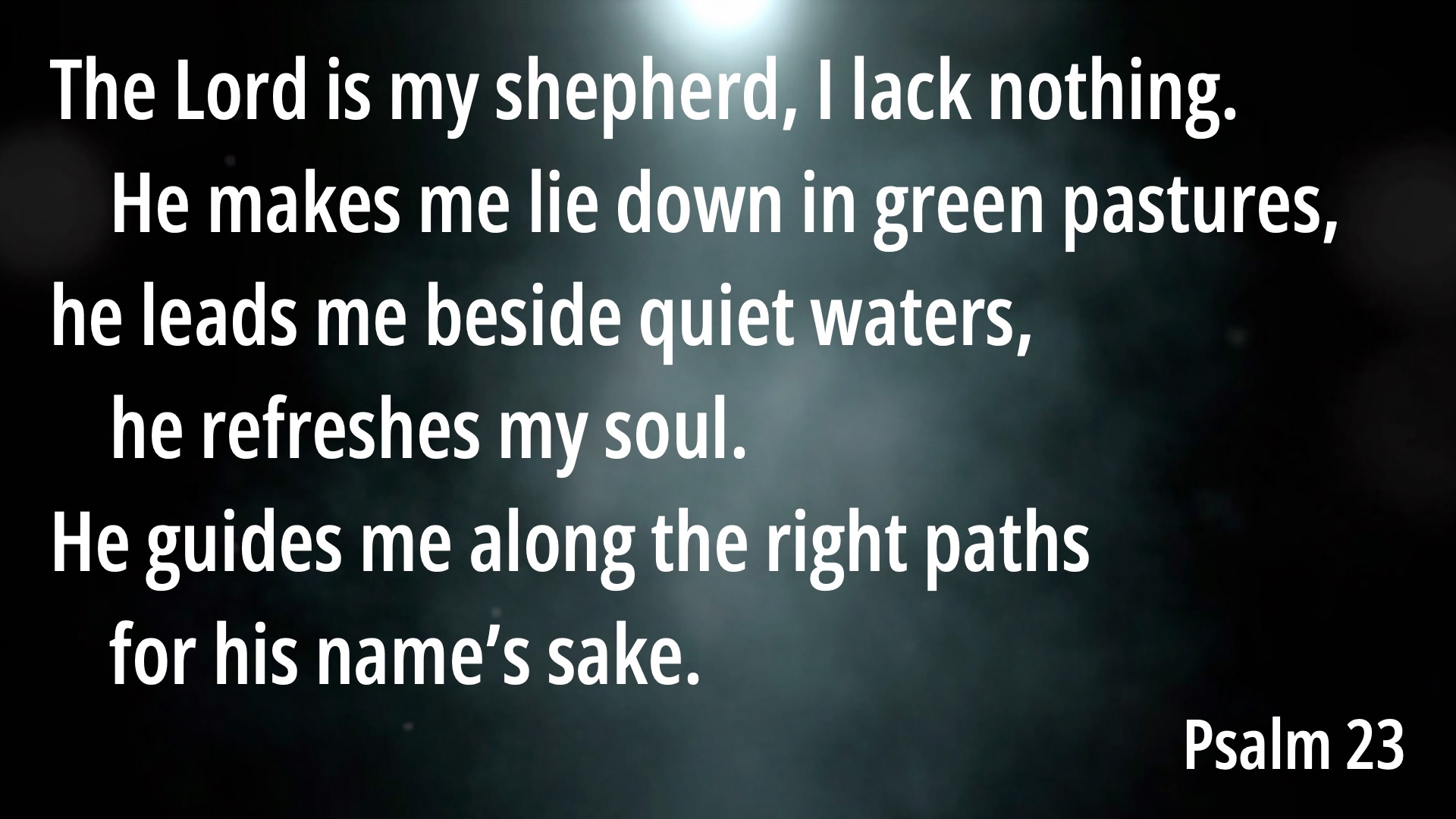
1 The Lord is my shepherd, I lack nothing. 2 He makes me lie down in green pastures, he leads me beside quiet waters, 3 he refreshes my soul. He guides me along the right paths for his name’s sake. 4 Even though I walk through the darkest valley, I will fear no evil, for you are with me; your rod and your staff, they comfort me. 5 You prepare a table before me in the presence of my enemies. You anoint my head with oil; my cup overflows. 6 Surely your goodness and love will follow me all the days of my life, and I will dwell in the house of the Lord forever.
The grass withers and the flowers fall, but the word of our God endures forever. Amen.
Caitlin Rhodes:
Psalm 23 has been comforting and encouraging the people of God for millennia. Whether it’s sung or recited in a worship service, requested at the hospital bedside with loved ones gathered around, or proclaimed in a celebration of life service, Psalm 23 is deeply personal and profoundly heartening. David, the shepherd boy turned shepherd king, writes this psalm from a place of total dependence on the Lord with clarity and conviction. He trusts the Lord his shepherd with all his heart.
Now, if you’re familiar with the life of David, you know he didn’t always dwell in that place of trust. And truth be told, we’re no different. When we feel a disconnect between the reality of our lives and these peaceful green pastures, we might wonder, is there something wrong with me or my walk with God? Where are my peaceful green pastures?
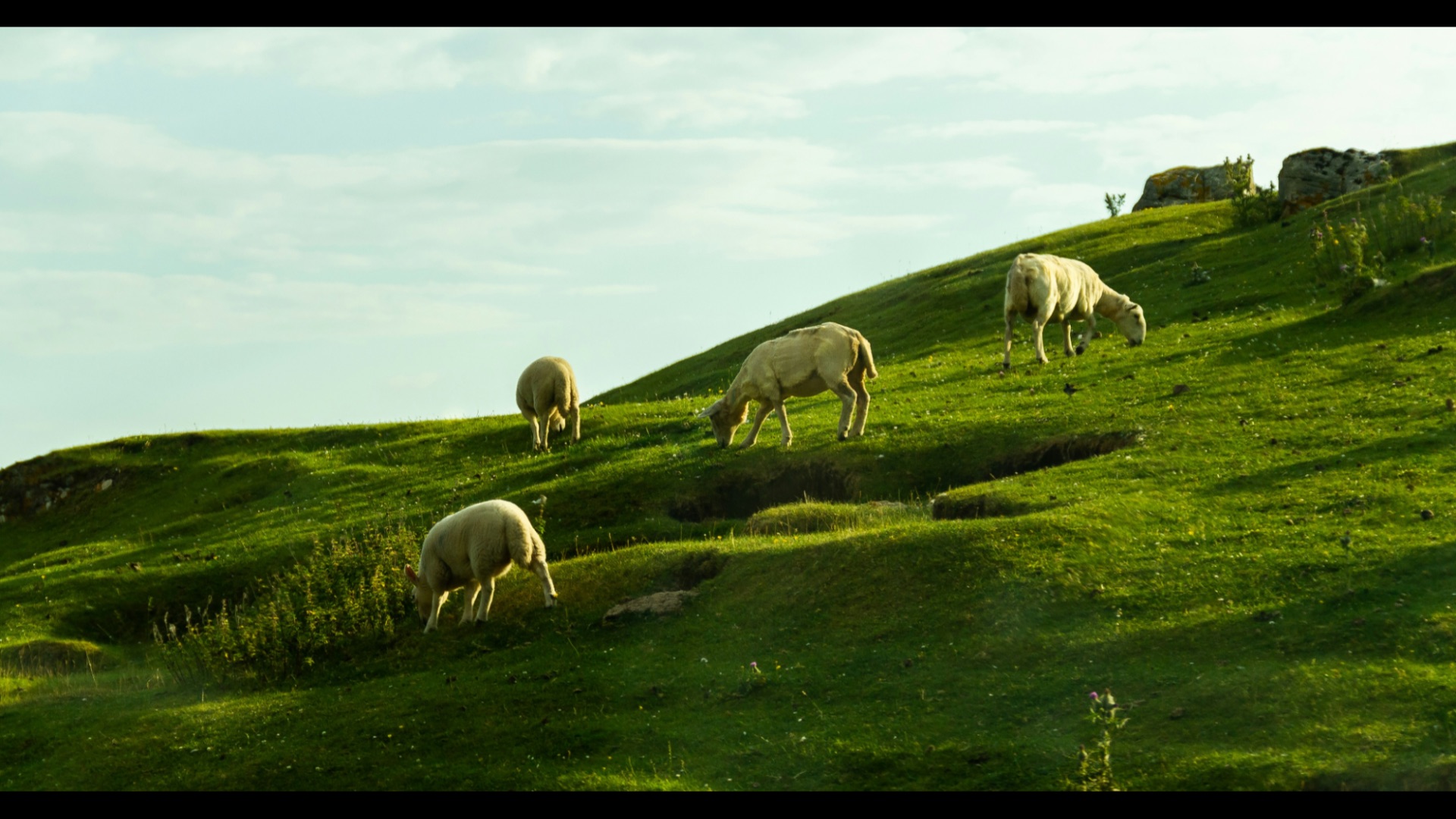
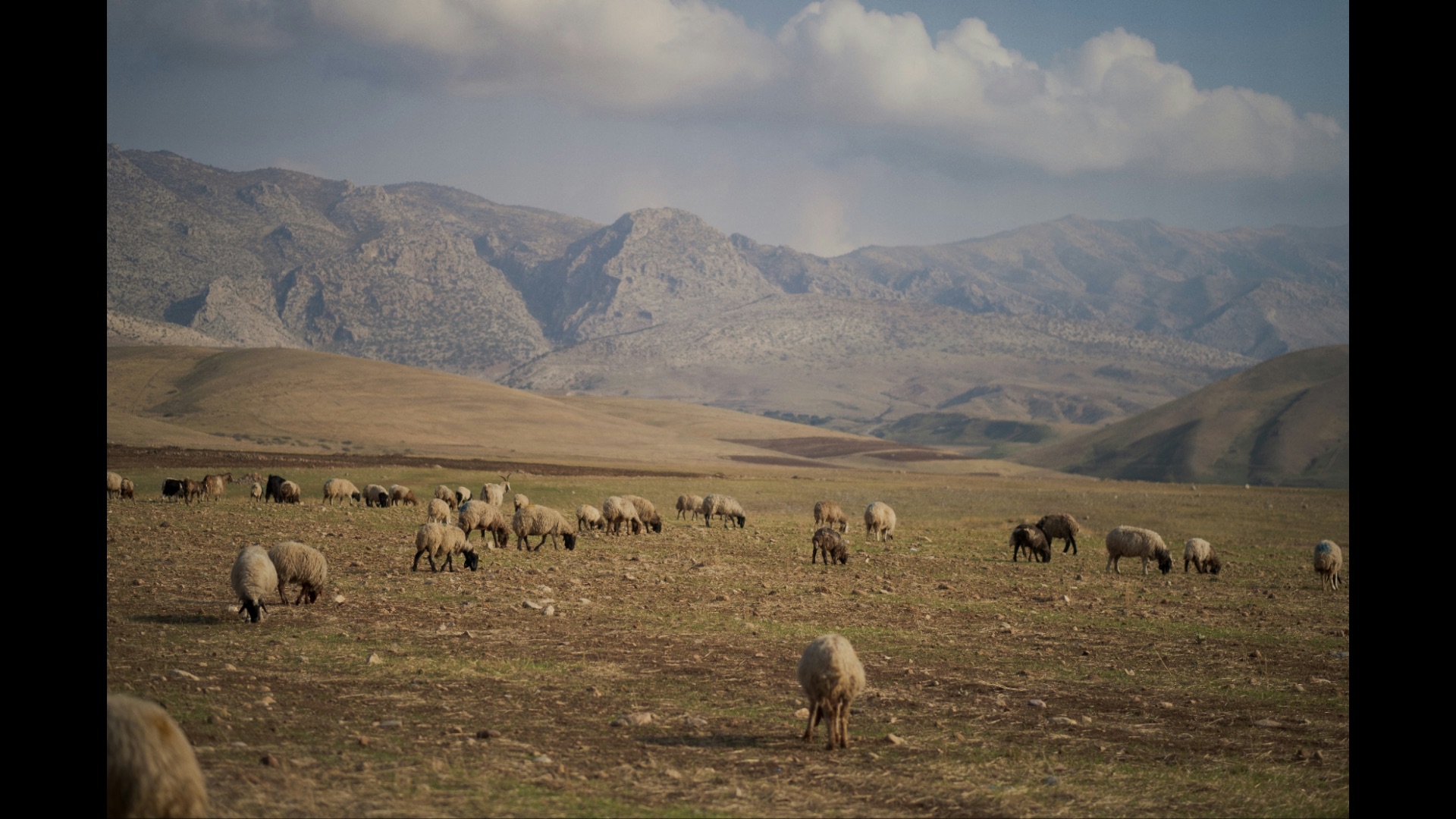
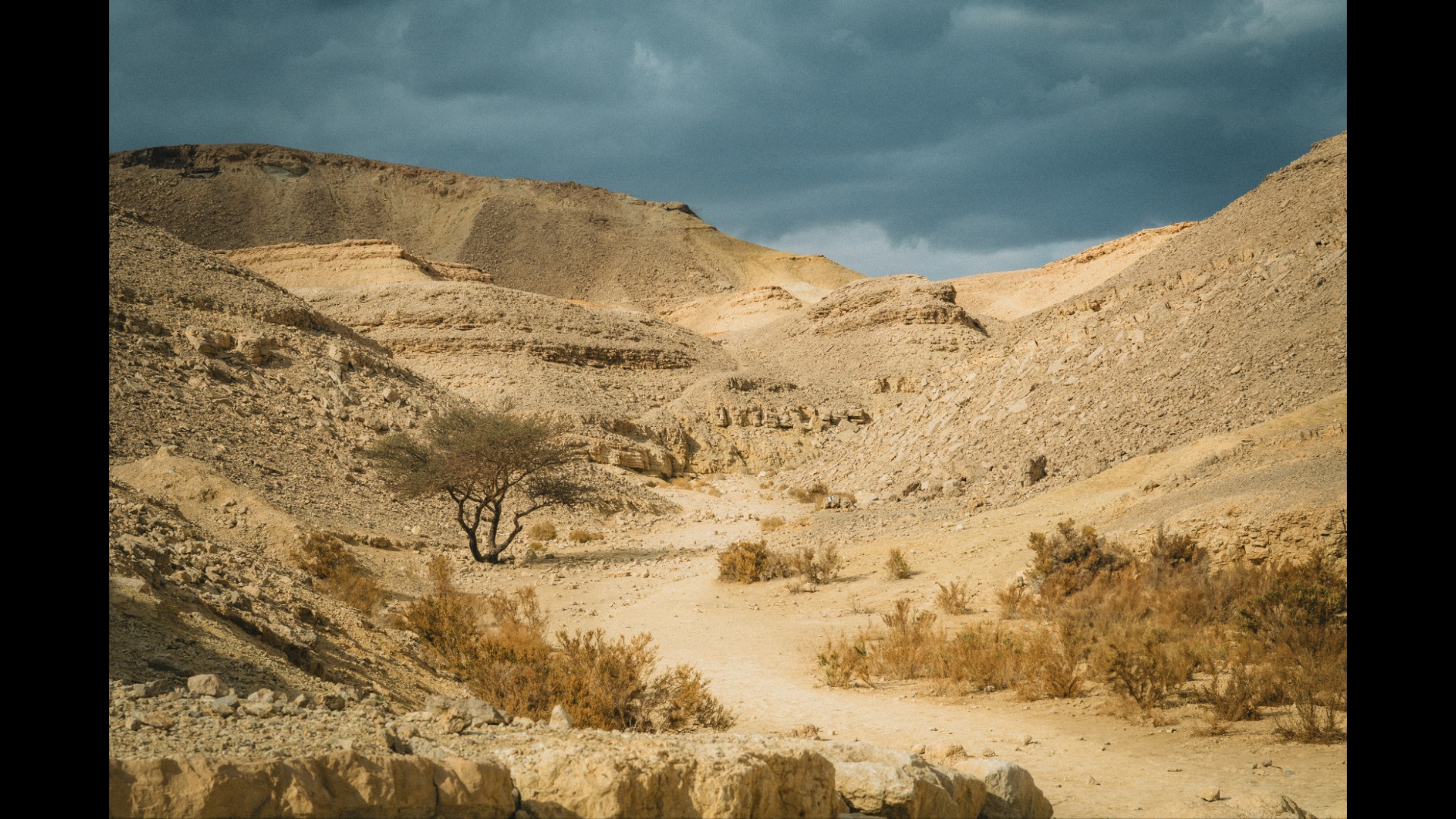
Well, it might comfort us to remember that David didn’t grow up in a landscape that looked like this. The barren brown desert of the ancient Near East looked more like this, or even like this for nine months of the year. And so perhaps it is the Judean wilderness that resonates more with our lives as we move through the brokenness and the chaos of this world.
Because even though we know that the Lord is our shepherd, we often feel that we need to take charge of our own shepherding—of ourselves, of our family, of our careers. Maybe you’re like me. If I dig down deep, deep to the root of what causes me to act like a sheep without a shepherd, it’s because I think I might know better than God what I need. And I’m afraid he won’t give it to me or to the people that I care about—that he can’t or that he won’t. So I think that it’s better that I call the shots. And then somehow I end up frustrated and fearful, exhausted and overwhelmed when things don’t go my way, or even when they do, and it’s not as I had hoped.
This attempted transfer of power from God to ourselves traces all the way back to the Garden of Eden. When Adam and Eve took that fruit from the Tree of Knowledge of Good and Evil, they were asserting their drive not just to know good and evil, but to know all things like God. We can try to take God’s place as the one who knows what’s best.
What about you? When you’re calling the shots, when you’re seeking to find your own green pasture, to whom or to what do you turn? What drives your choice of a shepherd?
Author David Foster Wallace, though not a follower of Jesus, said famously in his commencement speech to Kenyon graduates: “In the day to day trenches of adult life, there is actually no such thing as atheism. There is no such thing as not worshiping. Everybody worships. The only choice we get is what to worship.” And the compelling reason for maybe choosing some sort of God or spiritual type thing to worship—again, not a Christian—is that pretty much anything else you worship will eat you alive.
He goes on to run down a list of what are effectively false shepherds. He highlights their emptiness and their inability to satisfy. I’m sharing a pared down version of his litany here, though it’s still in his words. Foster Wallace informed the students:
If you worship money and things, if they are where you tap real meaning in life, then you will never have enough, never feel you have enough. Worship your body and beauty and sexual allure and you will always feel ugly. Worship power and you’ll end up feeling weak and afraid and you will need ever more power over others to numb you to your own fear. Worship your intellect, being seen as smart, and you’ll end up feeling stupid, a fraud, always on the verge of being found out.
— David Foster Wallace
Which of these false shepherds call out to you?
Listen, finally, to what David Foster Wallace warned: “The insidious thing about these forms of worship is that they are unconscious. They are default settings. They’re the kind of worship that you just gradually slip into day after day, getting more and more selective about what you see and how you measure value without ever being fully aware that that’s what you’re doing.”
I share his sobering words to hold up a mirror to the false worship that we are all prone to. There is good news, though. We have a counterweight to false worship, an antidote to this mindset.
In Psalm 23, last week you heard Pastor Bart earnestly remind this flock that you are more like the frightened Israelites than you are like David. He said, “You need a true champion, a true one from the in-between, to stand in between, to stand in the gap, to be in the middle.” David foreshadows Jesus, the Christ who defeated the enemies that we cannot defeat, and particularly death itself, which has been called the rumble of panic underneath everything.
In much the same way, today’s text shows us how David, the shepherd king, finds rest in God, the God who would send the ultimate shepherd king in Jesus. Just as God invited David to find comfort and rest in him, so too does he invite us to rest and rejoice in the presence and power of God with us.
In verses 1 to 3, we see that our true Shepherd finds or creates the right conditions for his sheep to flourish.
Psalm 23:1–3 (NIV)
1 The Lord is my shepherd, I lack nothing. 2 He makes me lie down in green pastures, he leads me beside quiet waters, 3 he refreshes my soul. He guides me along the right paths for his name’s sake.
So here we see that the continued biblical metaphor of the followers of God as sheep is very helpful. One shepherd from East Africa notes that because of the strange psychology of sheep, they’re almost impossible to get to lie down. He notes that they need a definite sense of freedom from fear, tension, aggravations, hunger. It’s only the shepherd himself who can provide release from these anxieties. It all depends upon the diligence of the owner whether his flock is free of disturbing influences.
Their ability to lie down is critical to a sheep’s survival. Did you know that sheep have to lie down in order to digest their food? They need to lie down to live. Their very life depends on their ability to rest. Their ability to rest in green pastures depends first on conditions that they cannot create for themselves. They must rely on their shepherd to cultivate these conditions for them. The shepherd is the only one who frees them from the grip of their anxieties.
This is very good news for us because we don’t need to operate out of our anxieties when the Lord is our shepherd.
Now, a simple way to remember that the Lord is trustworthy: pair the biblical story of God’s faithfulness with a walk down memory lane. Revisit your own history. What can you look back on in your past to point to God’s faithfulness in your own life? To remember that he’s gone ahead of you and prepared a place for you to rest and trust in him. Because when you see that God has made things turn out for the best in your past, you can trust him with your future.
What examples do you have in your own history, individually and collectively? I think of how God has sustained this church. The merger with Christ Church Lafayette, by human standards, could not have come at a worse time—just days before lockdown. And yet, while most churches shrank after COVID, your church family has expanded. Now you are more diverse, a more vibrant and intergenerational and multiethnic experience of the Kingdom of Heaven, with more than 30 nationalities represented, woven together on this Pentecost Sunday.
So when we are tempted to distrust that God has our best in mind, let’s ask the Holy Spirit to bring to mind his faithfulness in our past to give us faith for the future.
And here’s another way to give our anxieties to God: we don’t need to pretend that we have it all together. We can confess to God our temptation to shepherd our own souls. Verse 3 encourages us that he refreshes our souls. Other translations, perhaps more familiar ones, say “he restores my soul.” This word for restore in Hebrew is shuv. Shuv actually means to return or turn back. And so in this picture of restoration or refreshment, we see the kindness of God leading us to repentance, to turn back to him, to turn away from the false shepherds we have sought.
As a friend of mine always says, it doesn’t matter how far we’ve run away from God, it’s always just one step back. Better yet, it’s not even a full step. It’s just a pivot step. He’s already there. We just turn to face him.
Let’s return to the shepherd of our souls, the one who refreshes our weary souls, the one who guides us along right paths for his name’s sake. Now, the NIV translates “right paths” very well. It essentially means the most direct path. The shepherd guides his flock along the paths that he intends, the best paths for where he wants to take them.
Now, in the ancient Near East, shepherds didn’t drive their flocks from behind. They led from the front, singing and calling to their sheep to follow the sound of their voice. And so too does Jesus go before us. He doesn’t ask us to go anywhere he hasn’t already gone.
And sometimes the most direct path that our shepherd, our faithful shepherd, chooses is through the darkest valleys. We see this in verse 4.
Psalm 23:4 (NIV)
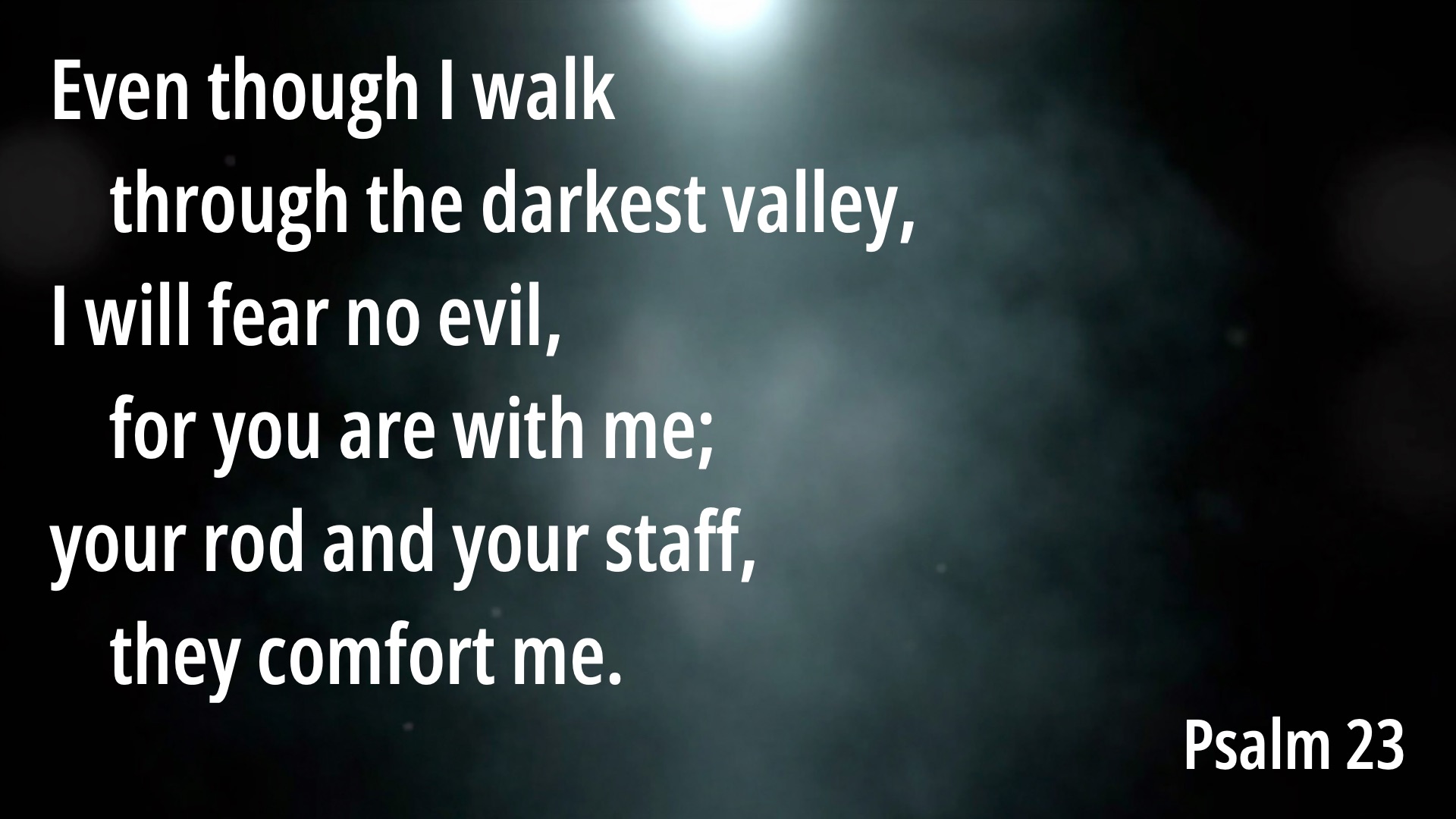
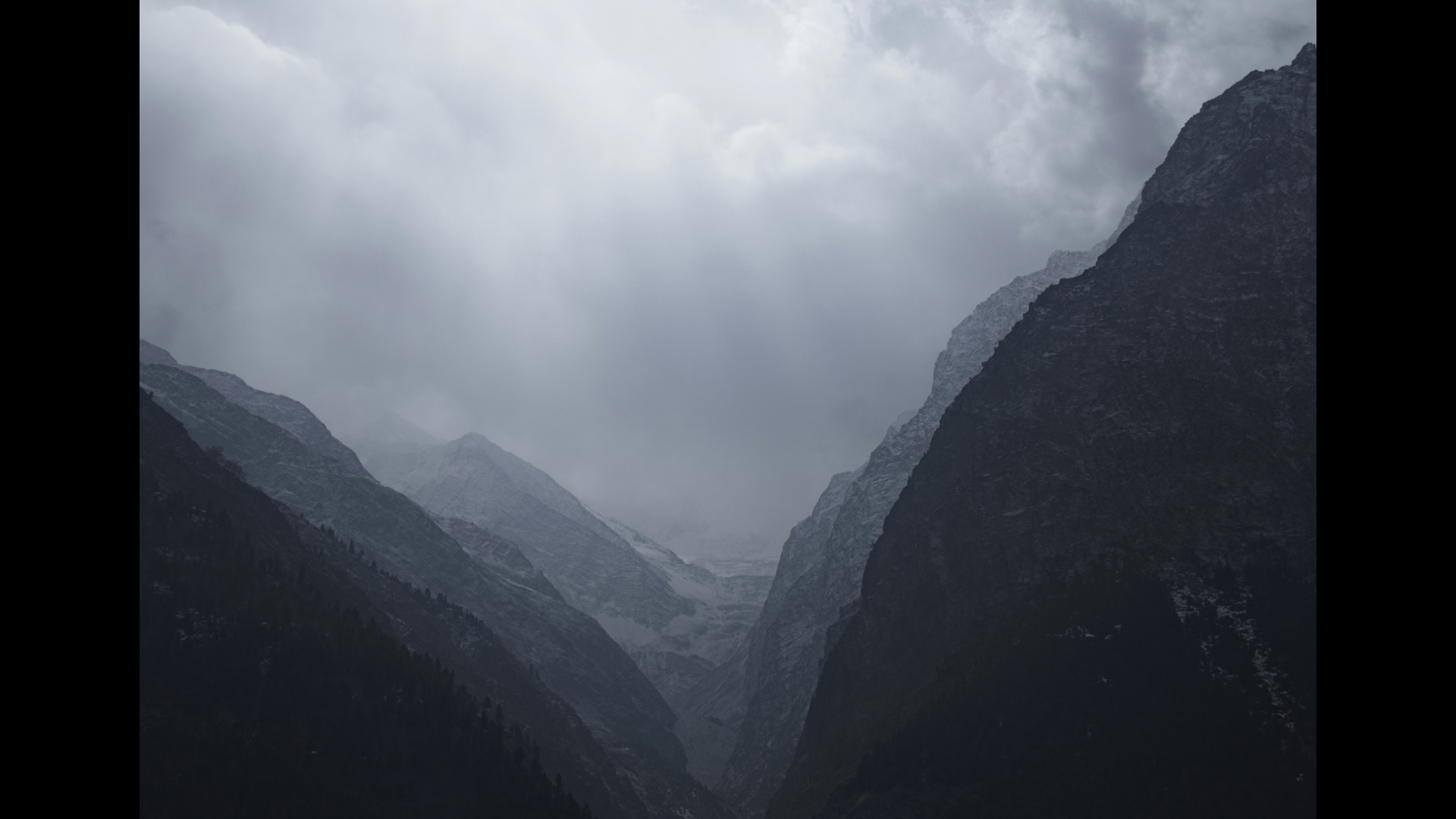
4 Even though I walk through the darkest valley, I will fear no evil, for you are with me; your rod and your staff, they comfort me.
We might be more familiar with translations that call this the valley of the shadow of death. This is a poetic term that means of deepest darkness, of gloom, or of despair. The Lord protects us with his presence in these darkest places, reassuring and comforting us.
For those of us who have experienced profound tragedy and loss, we might have actually encountered this mysterious undercurrent of joy lacing through the pain. I remember a very dark season in my own life after loss when I begged God, “Lord, please take this pain away from me.” And no sooner had I vocalized this thought than he instantly redirected my prayer to “Lord, help me to walk with you through all of this pain and help me not turn to anything else.” And he answered that prayer.
The Lord did not take my pain away, but his presence got me through it. He didn’t waste that experience. He taught me so much about his love and what it means to love with his love. Through his presence in my pain, God was with me, and I know that he has been and he will be with you in your own valleys of deepest darkness.
Now, that said, some of us have also known pain and suffering that we are still waiting to see how he will redeem. What can we do then? We take courage in the cross, in the big story that God authors. Even when it looks like all hope is lost, he is in the midst of his grand work of redemption.
Because, you see, having God as your shepherd does not mean that his right path will skirt around the valley of the shadow of death. Jesus himself plunged straight into the valley of death so that he might grant us safe passage through death itself into life everlasting. And what’s more, the comfort of his protection is also for the here and now.
Verse 4 describes the comfort created by the shepherd’s rod and staff. The staff is like a hook that the shepherd could use to nab the sheep if they began to wander astray. God continues to do this today through his word, by his Spirit, through his people, to grab us when we begin to wander and to bring us back to him.
What about that rod that the shepherd carried? What was that for? The rod was a wooden club with nails often spiked into its head that the shepherd brandished against wild animals, enemies that might harm his flock. It’s a fearsome weapon, but one that might not seem too relevant or necessary to you in your life today. You might be thinking, “Other than, you know, Satan, I don’t really have enemies.”
Actually, you do. Whenever you see the word “enemies” in Psalms, it’s perfectly appropriate to substitute the word “enemies” with whatever plagues you: temptation, sin, addiction, low self-esteem, anxiety, worry. We all have these enemies. But how does our shepherd defend us against these kinds of enemies?
In the armor of God described in Ephesians 6, the word of God is the sword of the Spirit. The Word of God is our weapon. Because as the Spirit shows you through the Word the one true shepherd, you will see that God alone will sustain and satisfy you. Other shepherds cannot restore your soul. They promise you protection, but they run you ragged pursuing that which cannot truly restore.
So Psalm 23 is more realistic and less idealistic than we first thought. Even as the overarching metaphor turns from a shepherd to a host and the setting from a valley to the banquet table, did you notice that the enemies remain?
Psalm 23:5–6 (NIV)
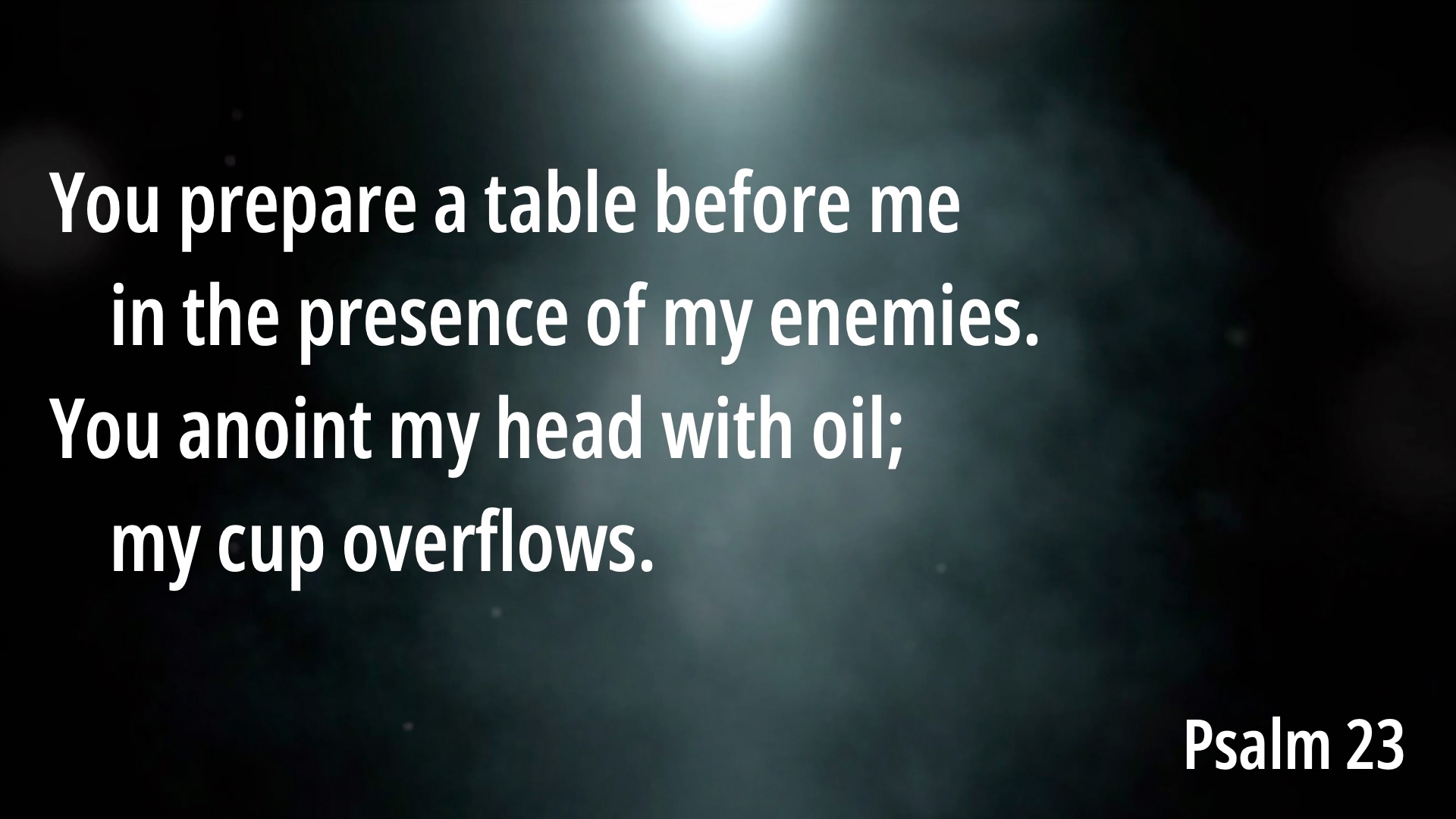
5 You prepare a table before me in the presence of my enemies. You anoint my head with oil; my cup overflows. 6 Surely your goodness and love will follow me all the days of my life, and I will dwell in the house of the Lord forever.
With confidence also overflowing, David writes these words. For you see, God’s protection isn’t just for this lifetime.
I want to focus on a word here that is simply translated “love.” The original word in Hebrew is hesed. Hesed is one of the most beautiful words in the Bible, but it has no counterpart in English. Our Bibles might say mercy, loving kindness, steadfast love, unfailing love, faithful love, or unchanging love. And hesed is beautiful because it is a love that is backed up by action.
What hesed really means is a love that is expressed in God’s loyalty to his covenant, a love that is demonstrated in God’s actions to uphold his covenant, and a love that is shown in how God restores us to be his people. This is the very love and loyalty that defines who God is. And it’s this God who is loyal to us when we are disloyal to him, who is faithful to us when we are unfaithful to him, who follows us.
And it gets even better. Our English word for “follow” doesn’t even begin to cover how this God of covenantal love blesses us with goodness and love. The verb is better translated here to “pursue” or “overtake.” This means that we have a shepherd who goes before us as a host and a shepherd who pursues us and overtakes us with his covenant loyalty, because that is who he is.
That’s what it means in verse 3, that he does this for his name’s sake. “For his name’s sake” means that God lives up to the faithfulness of his name, the name of the Lord. You could think of this as “true to his name.” The Lord is faithful to guide his people as he has promised.
And we do need a shepherd who both leads the way and pursues us when we go astray. Because when sheep go astray, they’re actually so agitated that they can’t just follow the shepherd back. The shepherd has to actually sling the sheep across his shoulders and carry it back to restore it to the fold.
God’s goodness and covenant loyalty pursues us all of our lives the same way a shepherd pursues his lost sheep. God’s faithfulness carries us home. Will we let him carry us?
Jesus is the only shepherd who can satisfy and sustain our souls. The only reason that we can withstand the shadow of death. The only reason that we do not need to fear evil is the same reason David says he will not fear evil: for you are with me (Psalm 23:4).
Unlike David, we get to live on this side of the cross. How much more then can we trust Jesus to protect us? Because we know that the protection that Jesus gives is so much more than a club carried on a shepherd’s belt. So much more than a wooden rod with nails driven into it.
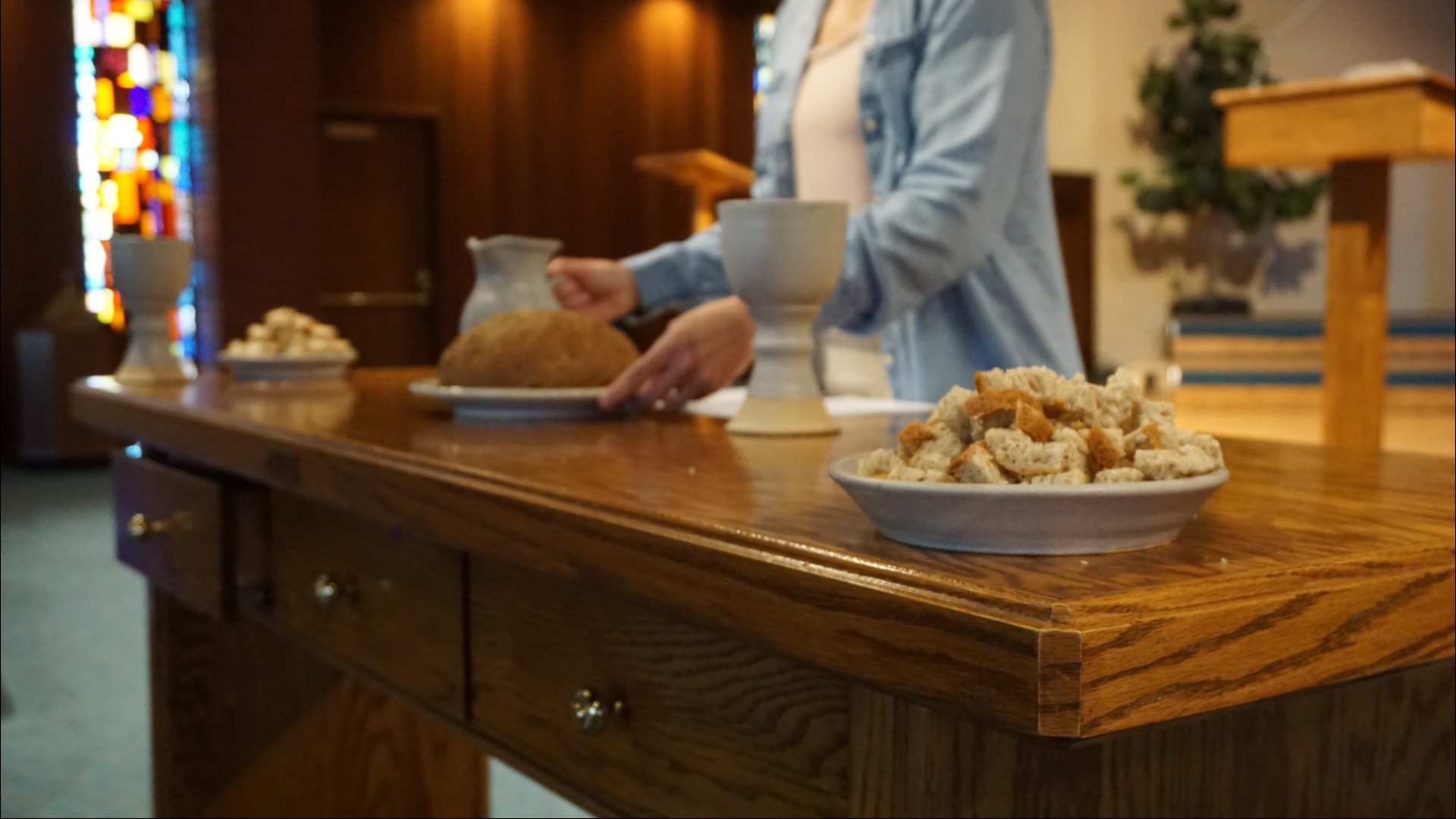
The protection that Jesus gives comes from a wooden cross that he carried to Calvary where nails were driven into him. Jesus is the only shepherd we can trust to restore our souls. Let us return to him. He goes before us and he pursues us. And through his own body and blood prepares a table for us.
And now, when we come to the table, taking and eating is a taste of the new creation rather than de-creation. And we can come and feast with confidence even in the face of our anxieties, because the Lord our God is our shepherd.
In the name of the Father, Son and Holy Spirit. Amen.