Faith Taylor:
Good morning, everyone. My name is Faith Taylor, and I am the director of the Lighthouse, our kids ministry. And today, Pastor Tommy and I will be reading from a selection from the Book of Judges.
Judges 2:10–12, 15–17 (NIV)
10 After that whole generation had been gathered to their ancestors, another generation grew up who neither knew the Lord nor what he had done for Israel. 11 Then the Israelites did evil in the eyes of the Lord and served the Baals. 12 They forsook the Lord, the God of their ancestors who had brought them out of Egypt. They followed and worshiped various gods of the peoples around them. They aroused the Lord’s anger.
Tommy Branagh:
15 Whenever Israel went out to fight, the hand of the Lord was against them to defeat them, just as he had sworn to them. They were in great distress. 16 Then the Lord raised up judges who saved them out of the hands of these raiders. 17 Yet they would not listen to their judges, but prostituted themselves to other gods and worshiped them. They quickly turned from the ways of their ancestors who had been obedient to the Lord’s commands.
Faith Taylor:
Judges 4:4–5 (NIV)
4 Deborah, a prophet, the wife of Lappidoth, was leading Israel at that time. 5 She held court under the Palm of Deborah between Ramah and Bethel in the hill country of Ephraim. And the Israelites went up to her to have their disputes decided.
Tommy Branagh:
Judges 5:31 (NIV)
31 So may all your enemies perish, Lord. But may all who love you be like the sun when it rises in its strength. Then the land had peace for forty years.
Faith Taylor:
The grass withers and the flowers fall,
Tommy Branagh:
but the word of our God endures forever.
Bart Garrett:
Thank you, Tommy and Faith. And I want to officially welcome you. Such a delightful Sunday. I love baptisms. I love having our elementary students here. I know we probably have family and friends and others who might be exploring Christian faith. And so this might be a bizarre ritual and a very obscure text. And hopefully we can spend a few minutes unpacking that a little bit.
Elementary students, as I said, I love it when you’re here, and I love it when you help me out. So I have a question for you. Have you ever gotten the best news? And by best news, I mean that your parents are taking you to Costco. But have you ever gotten the bestest news? And by bestest news, I mean you get to go to Costco and pick out a treat. Your favorite treat. But there’s some bad news. What happens if you head over to the aisle and you get lost? You have that panic feeling. Oh, no. Will my parents ever find me or will I live in Costco forever? But they search every aisle, they call you by name, and then here’s the good news. They find you. And they’re not mad at you. They’re actually delighted to be reconnected to you.
Well, this is an illustration of what this one story, the scriptures that we’re spending a year in, offers to us. The very best news is that God created us, and especially for relationship with him. And the bestest news is that God loves us with this never stopping, never giving up, always, forever and unbreakable love. But there’s some bad news. God lost us as we turned away, as we went our own way, as we lived the “I’m doing just fine all by myself” sort of a life. But there’s good news—what Christians call the gospel—that God doesn’t want separation from us, but pursues us with reckless abandon. His search and rescue mission. And the whole story is of God’s open welcome home embrace to his people.
So every first Sunday we have a wonder truth because our elementary students are in their classrooms week to week getting one. So today I’m giving you one here and I encourage you to write it down. Take it to the Connect table after the service for a prize. Take it into your life when things feel big and scary. This wonder truth connects the one big story to the story we’re talking about today. And here it is: Good news. God wins. All right, good news. God wins.
And today we turn to this new book of history, the Book of Judges. In the past, we’ve looked at Genesis through Joshua. So far we’ve seen spouses against spouses, sons against sons, clans against clans, nations against nations. And God’s rescue humans from themselves project has involved rescue from enslavement, rescue from wandering in the wilderness. But we see it’s never enough. And it happens again right here in chapter two.
After that whole generation had been gathered to their ancestors, another generation grew up who neither knew the Lord nor what he had done for Israel. Then the Israelites, who were the people of God in the Hebrew scriptures, did evil in the eyes of the Lord and served the Baals. They forsook the Lord, the God of their ancestors who had brought them out of Egypt. They followed and worshiped various gods of the people around them. Whenever Israel went out to fight, the hand of the Lord was against them to defeat them, just as he had sworn to them. They were in great distress. Then the Lord raised up judges who saved them out of the hands of these raiders. Yet they would not listen to their judges, but prostituted themselves to other gods and worshiped them. They quickly turned from the ways of their ancestors who had been obedient to the Lord’s commands.
So if you’re keeping score at home, God’s rescue humans from themselves project: God has rescued them from captivity. But the people forgot and they became evil. Then they thank other gods for the rescue. They become distressed. So God brings judges to deliver them. But the people would not listen to the judges. They served other gods. So if I could summarize this story in about 14 seconds, it would look something like this: Over and over and over again. So what does God do? God rescues the people yet again with this great judge.
And I pick it up in chapter four. Now, Deborah, who was also a prophet, the wife of Lappidoth, was leading Israel at the time. She held court, which is what judges do, under the Palm of Deborah between Ramah and Bethel, in the hill country of Ephraim. And the Israelites went up to her to have their disputes decided. So she’s also battle tested. We learned this in Deborah’s song, verse 31: So may all of your enemies perish, Lord, but may all who love you be like the sun when it rises in its strength. Then the land had peace 40 years.
So Deborah was a prophet, a judge and a warrior. She’s kind of like the OG Wonder Woman. She’s smart, she’s strong. You remember this Wonder Woman. She has the Lasso of Truth. That lasso restored memories, dispelled illusions and freed people. There’s almost a one to one correlation to Deborah. Restored memories—don’t forget the Lord. Dispelled illusions—you cannot do it alone. Freed the people—it’s God who sets you free. This is what Deborah’s song is all about.
And I want to speak just for a moment to our elementary, middle school and high school girls. Some folks will tell you that the Bible and Christianity puts down women. And that is simply not true. It’s a misread. The Bible celebrates women. In fact, in most predicaments, it’s often a woman who shows up. We’ve already talked about this with the Hebrew midwives and with Zipporah and with Miriam. And next week we’re going to look at Ruth and later with Esther. So the women are celebrated in scripture.
Now I want to talk to all the big kids, the grownups, for a second. Anyone can listen in, but I’ve highlighted some good stuff so far. But some of you might be asking, what about all the problematic stuff in this scripture? Because the message to God’s people in Joshua, in Judges, and in Deborah’s song is this: go take the promised land. I’m giving you the land. Go take it away from them. You may ask the question, isn’t this what’s wrong with the world throughout history and even to this very day in 2026—taking land by divine right, thereby legitimizing things like conquest and colonization and the displacement of indigenous inhabitants? Is God this warmongering, this bloodthirsty, sponsoring military conquest? If so, can we really trust a God like this?
Well, it would be a disservice to you and to this story to not address this. So I want to address these questions by asking you to consider four questions in the eight minutes I have left this morning and we can do it. The questions are: 1. What sort of feelings should I have about all this anyway? Question 2. What sort of world did they live in anyway? Question three, what sort of ways does God work with people anyway? Question four, what sort of God are we called to worship anyway? Look at each for just a moment.
What sort of feelings should we have about all of this anyway? Well, you should know Christians are invited to be open minded and free thinking. In fact, Christianity always encourages you to cross examine your thoughts and your feelings, to think and to feel more deeply, not less deeply. So with war and violence and conquest, why do you feel some kind of way about what’s good and bad or right and wrong? Where does my take on morality or my slant on ethics come from anyway?
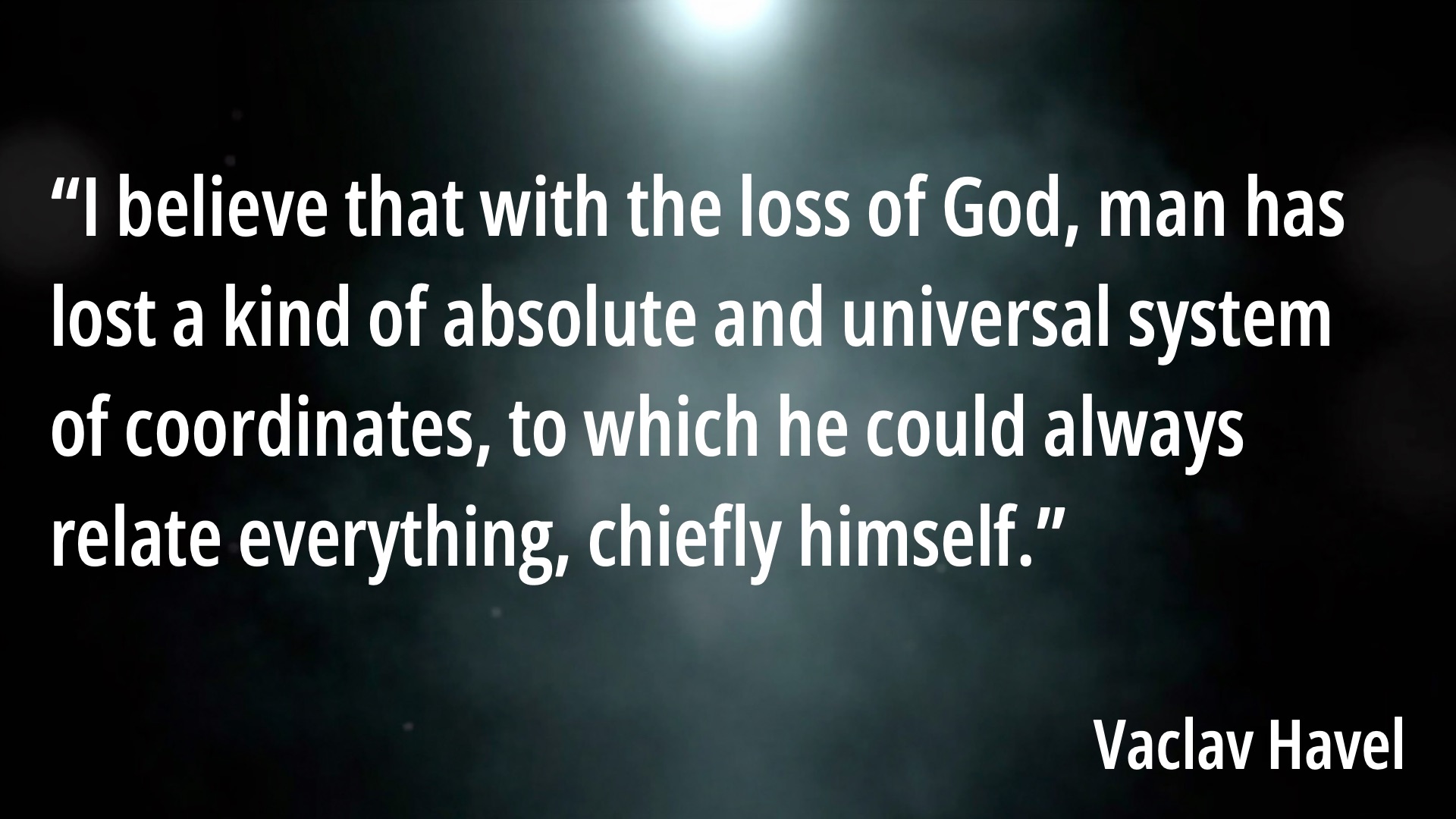
Well, back in week four, all the way back in the book of Genesis, all the way back in January, we talked about God starting over with the flood, which is another version of very difficult story in Scripture. And the author of Genesis said that every inclination of every human heart was evil all of the time. Yet still you can’t help but feel some kind of way about the flood story. And in that sermon I mentioned an author who was also the inventor of the artificial heart. And he famously said and wrote, “Naturally speaking, humans have no more basic rights than viruses.” And his point was that without God, and he was an atheist, by the way, but without God, we should not be able to care very much about the good or the bad of violence. It is what it is. Yet we see this begin to fall apart with our own feelings.
So in a microscope you see big viruses eating little viruses. You have no protest. There in a pond you see big fishes eating little fishes. Okay, maybe violence is natural, but big nations eating small nations, we begin to care, we say that’s wrong. Well, says who? Why is it wrong? So if you feel some kind of way about conquest and war and violence, it might very well point to a better way to live and to a God who is in the process of doing something about it, even if that God seems too slow for us.
So these types of stories and texts, they come with moral difficulty and they require humility and historical awareness and sometimes unresolved tension. Yet if we’ll let them, rather than just say it is what it is, they will allow us to reflect more deeply on God’s character and justice and even love.
Which brings me to our second question. What sort of world did these people live in anyway? And you should know that this is a world where nations sacrificed kids. They led captives into exile on fish hooks. They skinned people alive and stapled those skins as victory billboards on the walls. It’s been said that from 2000 BC to Jesus birth was probably the most brutally violent era in the history of the world. This was a world where power and legitimacy for any God was judged by that God’s nation state. In other words, the “my God can beat up your God” mentality.
Yet God said to his people in the book of Deuteronomy, victory does not come because of your righteousness, because you certainly aren’t righteous. But it comes because of the extreme wickedness of all of these nations. God never commands his people to build a divinely sanctioned empire that will conquer all of their neighbors. After all, they had been victims of empire themselves. They were to be a blessing to the nations, to unfold the outsiders, to be kind to the strangers inside their gates.
There’s this chilling story in the book of Joshua, where we were last week for Student Sunday, where God appears to Joshua as a divine warrior in a vision. And he’s drawn his sword, he’s combat ready. Something is about to go down. And Joshua asks God, “Are you for us or for them?” And God says, “Neither.” In Hebrew, literally, he says, “No, it’s the wrong question. The question is not whether or not I am on your side, but whether or not you are on my side.”
Because here scripture explicitly cautioned them in that world. And it cautions us in this world today that we don’t operate from the notion God is on our side. Invasion, conquest, war—it’s all heart wrenchingly grievous. And we enter into it with extreme care and caution as a rare last alternative.
So that leads me to the third question. What sort of ways does God work with these sorts of people anyway? My answer is he works the same with them as he does with us. God works with people where they are much like a parent works with a child. If you desire a beautiful, mature 20 year old, then you will put up with a crying, selfish, illiterate baby with no bladder or bowel control. And God does the same thing with the Israelites in the Hebrew scriptures. He keeps pleading with them, “Return to me, remember me.” God is forbearing and long suffering and patient.
Which leads me to the last question: what sort of God are we called to worship anyway? Now I have a very deep passion to help skeptics with the faith. I love sitting down with people who are exploring faith. And often I’ll ask a question like, if there were a God, what sort of God would you want that God to be? And usually the answers fall in a couple categories. It’s a God who is big enough to be God for sure, and who is close enough to care deeply about me. And philosophers, for as long as there has been philosophy, talk about the transcendence and the immanence of God. And there are 50 heresies if we don’t hold those two things in tension. Because Scripture teaches that God is holy, which simply means set apart, and God is near. God is so much closer than we think. So something about this evokes what’s called in Scripture the fear of the Lord, this knee knocking, jaw dropping, spine shivering, breathtaking awe and reverence.
So when we go back to our context, this story in Joshua and Judges, how does this connect? Well, we see God is holy, but God is also near. And there are only glimpses of God’s nearness in the Hebrew scriptures. The calling of Deborah is one. God’s appearance as divine warrior to Joshua is another. Yet there will be another Deborah story. There will be another Joshua story. In fact, Jesus’ name in Hebrew is Yeshua, Joshua, which means “the one who saves.” And we see in Jesus a God who is both holy and near.
So as I close, in the Gospel of Matthew, there’s this story where Matthew’s telling about the life of Jesus and he talks about this Canaanite woman. And if you saw those words as a Hebrew—Canaanite—you’d immediately be thinking about the conquest of Canaan, the promised land. This Canaanite woman comes to Jesus seeking healing for her daughter. And there’s this crazy exchange where she ends up talking down to Jesus and he lets her. But then because of her persistence, he says, “Your daughter is healed, you have great faith.” And immediately following this story, the next story is the feeding of the 4,000 people. Remember that story? Some of us do.
I’ve noticed over the years, some people get hung up here, they say, “Wait, wait. Was it 5,000? Was it 4,000? You can’t trust the Bible.” But hold on. There were two large scale feedings. The first one took place in Jewish country. Jesus fed 5,000 people. You know how many baskets were left over? Twelve. Brought to Jesus by each disciple, symbolizing and signifying the return and restoration of the twelve tribes of Israel around the person and work of Jesus. And then in this second feeding, it took place not in Jewish country, but in gentile country. In the Canaan land. Jesus fed 4,000 people. Do you know how many baskets were left over? Seven. Do you know how many nations were displaced from the land by the Israelites? That’s right, seven. Symbolizing and signifying the return and restoration of these seven nations around the person and work of Jesus.
This is Jesus’ insurgency of peace, his invasion of shalom. Jesus is saying in these stories to Israel and to the whole world, “I am the new bread. I am the bread of life that feeds you. And oh, by the way, I am the new Israel. I am the new land. I am the new holy land.” I believe personally, with deep conviction that to take Jesus’ teaching at face value is to insist that any one physical land is not more holy than another one. What is more, any Christian should probably give some consideration to pacifism. Even if we can’t get all the way there in a messed up broken world, we must take very seriously the cross of Jesus Christ as the beginning of the ending of all violence once and for all. War, invasion, conquest—the stuff of the Old Testament—ultimately has no place in a post Jesus world. This is our best hope. The only divine right to take the land is to take Jesus into your life as the one who is holy, God Almighty, and the one who is near, offered up as a sacrifice for us. All good news. God wins. How does God win? Through the sacrificial love of Jesus Christ. In the name of the Father, Son and Spirit, we pray. Amen.